Evidence-Based Exercise Routines That Improve Insulin Sensitivity: Your Complete Guide
Why Exercise is Your Secret Weapon Against Insulin Resistance
Insulin resistance affects over 88 million Americans and is the underlying driver of type 2 diabetes, PCOS, metabolic syndrome, and weight gain. While medication can help, exercise remains the most powerful, natural intervention for improving insulin sensitivity – with some studies showing improvements of up to 85% in just 12 weeks. Regular physical activity is the most potent non-pharmacological tool for improving metabolic health. According to research published in Nature Reviews Endocrinology, a single session of exercise can increase insulin-stimulated glucose uptake for up to 48 hours.
At BodyCodexx, we believe in evidence-based approaches that deliver real results. This comprehensive guide provides you with scientifically proven exercise routines specifically designed to maximize insulin sensitivity, helping you take control of your metabolic health naturally.
Affiliate Disclosure: This page contains affiliate links. If you purchase through my links, I may earn a small commission at no extra cost to you. I only share products I believe align with my brand and support my readers’ needs.
The Science: How Exercise Transforms Insulin Function
Understanding Insulin Resistance
When your cells become resistant to insulin, your pancreas works overtime to produce more insulin to maintain normal blood sugar levels. This creates a cascade of metabolic dysfunction, including:
- Increased fat storage, especially around the midsection
- Chronic inflammation throughout the body
- Elevated blood pressure and cholesterol
- Hormonal imbalances affecting mood and energy
- Increased risk of type 2 diabetes and heart disease
How Exercise Reverses the Process
Immediate Effects (During and 2-48 hours post-exercise):
- Muscle contractions directly increase glucose uptake by up to 50%
- Exercise activates glucose transporter proteins (GLUT4) independent of insulin
- Post-exercise insulin sensitivity improves for 24-72 hours
- Muscle glycogen depletion creates immediate glucose storage capacity
Long-term Adaptations (8-16 weeks of consistent training):
- Increased muscle mass improves glucose disposal
- Enhanced mitochondrial density and function
- Improved capillary density for better nutrient delivery
- Reduced chronic inflammation markers by 20-40%
- Optimized hormone production, including growth hormone and testosterone
The BodyCodexx Exercise Framework for Insulin Sensitivity
Based on extensive research analysis, we’ve identified four key components that maximize insulin sensitivity improvements:
- Resistance Training (3-4x per week) – Primary driver of long-term improvements
- High-Intensity Interval Training (2-3x per week) – Acute insulin sensitivity boosts
- Low-Intensity Steady State (3-5x per week) – Daily glucose regulation
- Movement Snacks (Throughout the day) – Continuous metabolic optimization
Component 1: Resistance Training – Your Metabolic Game Changer
Why Resistance Training is King for Insulin Sensitivity
Muscle tissue is metabolically active, consuming glucose even at rest. Every pound of muscle gained increases your metabolic rate by 50-100 calories per day and dramatically improves your body’s ability to handle carbohydrates. Resistance training isn’t just for building muscle; it significantly increases the expression of GLUT4 (glucose transporter type 4) in muscle cells. A meta-analysis of 14 studies confirmed that resistance training significantly reduces HbA1c levels in adults with Type 2 Diabetes.
Research consistently shows:
- 16 weeks of resistance training improves insulin sensitivity by 23-48%
- Strength training increases lean muscle mass by 2.2-4.4 pounds in beginners
- Metabolic benefits persist for 72+ hours after each session

EAST MOUNT Adjustable Dumbbells Set of 2
EAST MOUNT Adjustable Dumbbells 5 lb Dumbbells Set of 2 / Pair 10 lb Total Free Weights 6 in 1 Women Hand Weights for Home, Office, Gym Exercise Training 2 lb 3 lb 4 lb 5 lb Fast Adjust.
The BodyCodexx Insulin-Sensitivity Strength Program
Phase 1: Foundation (Weeks 1-4)
Goal: Establish movement patterns and build base strength
Schedule: 3 days per week (Monday, Wednesday, Friday) Duration: 40-45 minutes per session Rest between sets: 60-90 seconds
Workout A (Week 1, 3):
- Goblet Squats – 3 sets × 8-12 reps
- Why it works: Activates large muscle groups, high glucose demand
- Form tip: Keep chest up, sit back into heels
- Push-ups (Modified if needed) – 3 sets × 5-15 reps
- Progression: Wall → Incline → Knee → Full → Elevated feet
- Focus: Slow, controlled movement
- Bent-Over Dumbbell Rows – 3 sets × 8-12 reps
- Benefits: Improves posture, activates the posterior chain
- Weight: Start light, focus on squeezing shoulder blades
- Plank Hold – 3 sets × 15-45 seconds
- Core stability: Essential for all compound movements
- Progression: Add 5 seconds each week
- Glute Bridges – 3 sets × 12-20 reps
- Target: Glutes and posterior chain activation
- Squeeze: Hold 1-2 seconds at the top
Workout B (Week 2, 4):
- Step-ups – 3 sets × 8-12 per leg
- Chest Press (Dumbbells) – 3 sets × 8-12 reps
- Lat Pulldowns or Assisted Pull-ups – 3 sets × 6-10 reps
- Dead Bugs – 3 sets × 8-12 per side
- Calf Raises – 3 sets × 15-20 reps
Phase 2: Progressive Overload (Weeks 5-8)
Goal: Increase strength and muscle mass
Schedule: 4 days per week (Monday, Tuesday, Thursday, Friday) Duration: 45-50 minutes per session Rest between sets: 45-75 seconds
Upper Body (Monday, Thursday):
- Dumbbell Bench Press – 4 sets × 6-10 reps
- Bent-Over Rows – 4 sets × 8-12 reps
- Overhead Press – 4 sets × 6-10 reps
- Pull-ups/Lat Pulldowns – 4 sets × 6-12 reps
- Dips or Close-Grip Push-ups – 3 sets × 8-15 reps
- Bicep Curls – 3 sets × 10-15 reps
- Plank Variations – 3 sets × 30-60 seconds
Lower Body (Tuesday, Friday):
- Squats (Goblet or Barbell) – 4 sets × 8-12 reps
- Romanian Deadlifts – 4 sets × 8-12 reps
- Walking Lunges – 4 sets × 10-15 per leg
- Hip Thrusts – 4 sets × 12-18 reps
- Bulgarian Split Squats – 3 sets × 8-12 per leg
- Calf Raises – 3 sets × 15-25 reps
- Side Planks – 3 sets × 20-45 seconds per side

Resistance Bands with Handles for Home Gym Strength Training
Transform Any Space into Your Personal Gym. Meet the 11-piece set of resistance bands that puts hundreds of full-body exercises at your fingertips. Engineered for versatility and real results that grows with you.
Phase 3: Strength and Power (Weeks 9-12)
Goal: Maximize strength gains and metabolic adaptations
Schedule: 4-5 days per week Duration: 50-60 minutes per session Rest between sets: 30-90 seconds (varies by exercise)
Push Day:
- Barbell/Dumbbell Bench Press – 5 sets × 3-8 reps
- Incline Dumbbell Press – 4 sets × 6-10 reps
- Overhead Press – 4 sets × 5-8 reps
- Lateral Raises – 4 sets × 12-20 reps
- Close-Grip Bench Press – 3 sets × 8-12 reps
- Tricep Pushdowns – 3 sets × 10-15 reps
Pull Day:
- Deadlifts – 5 sets × 3-8 reps
- Pull-ups/Chin-ups – 4 sets × 5-12 reps
- Barbell Rows – 4 sets × 6-10 reps
- Face Pulls – 4 sets × 15-20 reps
- Barbell Curls – 3 sets × 8-12 reps
- Hammer Curls – 3 sets × 10-15 reps
Legs Day:
- Squats – 5 sets × 5-10 reps
- Romanian Deadlifts – 4 sets × 6-10 reps
- Bulgarian Split Squats – 4 sets × 8-15 per leg
- Hip Thrusts – 4 sets × 10-15 reps
- Walking Lunges – 3 sets × 12-20 per leg
- Calf Raises – 4 sets × 15-25 reps
Progressive Overload Principles
Week-by-Week Progression:
- Weeks 1-2: Focus on form, use lighter weights
- Weeks 3-4: Increase reps by 1-2 per set
- Weeks 5-6: Increase weight by 2.5-5 pounds
- Weeks 7-8: Add an extra set to major exercises
- Weeks 9-12: Continue weight increases while maintaining good form
| PHASE | FOCUS | FREQUENCY | BEST FOR |
| Phase 1: Foundation | LISS (Zone 2) & Mobility | Daily | Beginners, High Stress, Weight Loss |
| Phase 2: Metabolic Shift | Hypertrophy (Muscle Growth) | 3-4x / Week | Improving Basal Metabolic Rate |
| Phase 3: Optimization | HIIT & Power | 1-2x / Week | Breaking Plateaus, Maximum Sensitivity |
Component 2: High-Intensity Interval Training (HIIT)
The HIIT Advantage for Insulin Sensitivity
HIIT has been shown to be more time-efficient than traditional cardio. A study in the Journal of Applied Physiology found that just two weeks of HIIT can substantially improve insulin sensitivity even in overweight individuals.
HIIT provides unique metabolic benefits that complement resistance training:
- Excess Post-Exercise Oxygen Consumption (EPOC): Burns calories for 24+ hours post-workout
- Improved VO2 max: Better cardiovascular fitness in less time
- Enhanced fat oxidation: Specifically targets visceral adipose tissue
- Time-efficient: Maximum benefits in 15-25 minutes
BodyCodexx HIIT Protocols
Beginner HIIT (Weeks 1-4)
Frequency: 2x per week Total Time: 20 minutes Work-to-rest ratio: 1:2 (20 seconds work, 40 seconds rest)
Sample Workout:
- 5-minute warm-up (light jogging or marching)
- 8 rounds of: 20 seconds high intensity, 40 seconds active rest
- 5-minute cool-down
Exercise Options:
- Bodyweight squats
- Mountain climbers
- Jumping jacks
- High knees
- Burpees (modified if needed)
- Step-ups
Intermediate HIIT (Weeks 5-8)
Frequency: 3x per week Total Time: 25 minutes Work-to-rest ratio: 1:1 (30 seconds work, 30 seconds rest)
Sample Workout:
- 5-minute dynamic warm-up
- 10 rounds of: 30 seconds high intensity, 30 seconds active rest
- 5-minute cool-down
Advanced HIIT (Weeks 9-12)
Frequency: 3-4x per week Total Time: 30 minutes Work-to-rest ratio: 2:1 (40 seconds work, 20 seconds rest)
Sample Workout:
- 5-minute warm-up
- 12 rounds of: 40 seconds high intensity, 20 seconds rest
- 5-minute cool-down
Equipment-Based HIIT Options
Treadmill Intervals:
- Sprint: 8-10 mph (adjust based on fitness)
- Recovery: 3-4 mph walking
- Incline: 1-3% to reduce joint impact
Stationary Bike:
- High intensity: 85-95% max effort
- Recovery: Easy pedaling (40-50% effort)
- Resistance: Increase for strength component
Rowing Machine:
- High intensity: 28-32 strokes per minute
- Recovery: 18-22 strokes per minute
- Focus: Proper form over speed
Component 3: Low-Intensity Steady State (LISS)
Why LISS Matters for Insulin Sensitivity
While HIIT gets the spotlight, LISS provides crucial benefits:
- Daily glucose regulation: Helps manage blood sugar throughout the day
- Active recovery: Promotes circulation and reduces muscle soreness
- Stress management: Lower intensity reduces cortisol production
- Sustainability: Easier to maintain long-term
LISS Guidelines
Intensity: 60-70% maximum heart rate (able to hold a conversation) Duration: 30-60 minutes Frequency: 3-5 times per week (can be daily)
Calculate Your Target Heart Rate:
- Maximum HR = 220 – your age
- LISS zone = 60-70% of max HR
- Example: 40-year-old → Max HR = 180 → LISS = 108-126 bpm
Best LISS Activities
Indoor Options:
- Treadmill walking (incline for intensity)
- Stationary bike
- Elliptical machine
- Rowing (moderate pace)
- Swimming
Outdoor Options:
- Brisk walking/hiking
- Cycling
- Swimming
- Light jogging
Daily Life Integration:
- Walking meetings
- Taking stairs instead of elevators
- Parking further away
- Walking/biking for errands
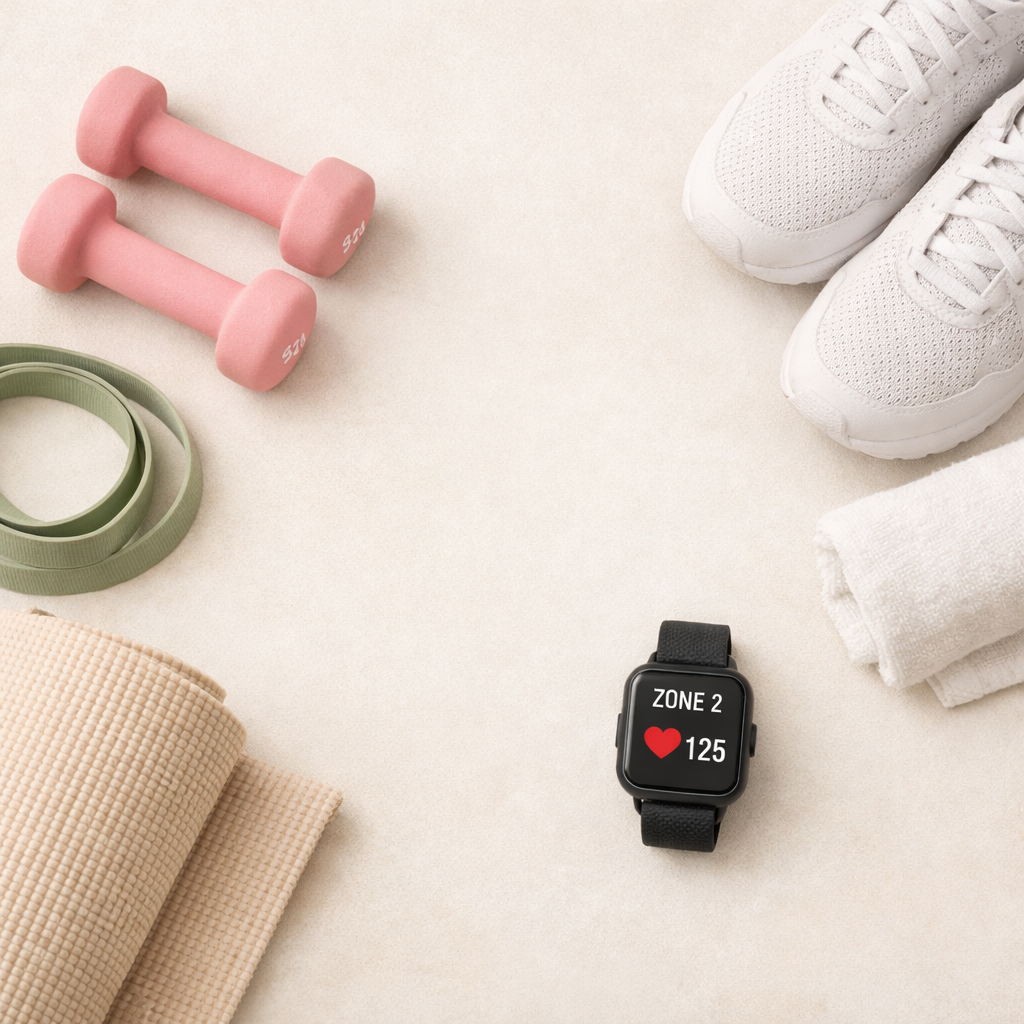
💡 The “Zone 2” Trend: You may have heard biohackers like Dr. Peter Attia talk about Zone 2 Training. This is simply LISS (Low-Intensity Steady State) performed at a heart rate where you can still hold a conversation but feel slightly breathless. This specific intensity is the “sweet spot” for improving Metabolic Flexibility—teaching your body to switch efficiently between burning fat and sugar for fuel.
Component 4: Movement Snacks
The Power of Frequent Movement
Research shows that breaking up sedentary time with brief movement “snacks” can:
- Improve postprandial (after-meal) glucose response by 20-30%
- Reduce insulin spikes throughout the day
- Counteract the negative effects of prolonged sitting
- Boost overall daily energy expenditure
Movement Snack Strategies
Post-Meal Protocol (Most Important):
- Timing: Within 30 minutes after eating
- Duration: 10-15 minutes
- Intensity: Light to moderate (comfortable walking pace)
- Benefit: Can reduce blood sugar spikes by 20-30%
Hourly Movement Breaks:
- Every hour: 2-3 minutes of movement
- Options: Desk stretches, wall push-ups, calf raises, stairs
- Goal: Break up prolonged sitting
Micro-Workouts (2-5 minutes):
- 20 bodyweight squats
- 1-minute plank hold
- 30-second wall sit
- 10 push-ups
- Stair climbing
The “Soleus Pushup” (The Sitting Exercise):
A 2022 study from the University of Houston discovered that the soleus muscle (in your calf) can improve blood glucose regulation while you are sitting.
How to do it: While sitting, keep your toes on the floor and lift your heels as high as they go, then let them drop. Repeating this “pushup” while working at your desk can effectively double the rate of oxidative metabolism in the local muscle.
Creating Your Personalized Insulin Sensitivity Program
Weekly Schedule Template
Option 1: Balanced Approach (6 days active)
- Monday: Upper body strength + 15-min LISS
- Tuesday: HIIT (20-25 minutes)
- Wednesday: Lower body strength + movement snacks
- Thursday: LISS (45-60 minutes)
- Friday: Full body strength + 10-min HIIT
- Saturday: LISS (30-45 minutes) + active recovery
- Sunday: Rest or gentle yoga
Option 2: Time-Efficient (4 days active)
- Monday: Full body strength + 15-min HIIT
- Tuesday: LISS (45-60 minutes)
- Wednesday: Rest (movement snacks only)
- Thursday: Upper/Lower strength + 15-min HIIT
- Friday: Rest (movement snacks only)
- Saturday: LISS (60+ minutes)
- Sunday: Active recovery or rest
Customization Based on Goals
Primary Goal: Weight Loss
- Increase HIIT frequency to 4x per week
- Add extra LISS sessions
- Focus on compound strength exercises
- Implement a strict post-meal walking routine
Primary Goal: Muscle Building
- Prioritize resistance training 4-5x per week
- Moderate HIIT (2-3x per week)
- Ensure adequate recovery between sessions
- Focus on progressive overload
Primary Goal: General Health
- Balanced approach with all components
- Emphasis on consistency over intensity
- Include activities you enjoy
- Focus on sustainable habits
Maximizing Your Results: Advanced Strategies
Periodization for Long-Term Success
Phase 1 (Months 1-3): Foundation Building
- Focus on movement quality and consistency
- Build aerobic base with more LISS
- Master basic strength movements
- Establish routine and habits
Phase 2 (Months 4-6): Intensity Increase
- Add more challenging exercises
- Increase HIIT frequency and intensity
- Progressive overload in strength training
- Fine-tune nutrition timing
Phase 3 (Months 7-12): Specialization
- Focus on specific goals (strength, endurance, body composition)
- Advanced training techniques
- Optimize recovery protocols
- Track detailed progress metrics
Nutrition Timing for Enhanced Insulin Sensitivity
Pre-Workout (30-60 minutes before):
- Light carbohydrate snack if exercising >60 minutes
- Avoid heavy meals 2-3 hours before training
- Stay hydrated but avoid overhydration
Post-Workout (Within 30-60 minutes):
- Protein: 20-40g to support muscle recovery
- Carbohydrates: 20-60g to replenish glycogen (higher after intense sessions)
- Timing matters: This window optimizes insulin sensitivity
Daily Meal Timing:
- Larger meals earlier in the day when insulin sensitivity is naturally higher
- Lighter dinners 3+ hours before bed
- Consider intermittent fasting protocols (consult healthcare provider)
For comprehensive nutrition strategies, see our detailed guide on PCOS Diet Plans That Actually Work
Recovery and Sleep Optimization
Sleep Quality Impact:
- Poor sleep (< 7 hours) can reduce insulin sensitivity by 25-30%
- Deep sleep is when growth hormone is released
- Sleep deprivation increases cortisol and hunger hormones
Recovery Protocols:
- Active recovery: Light movement on rest days
- Sleep hygiene: 7-9 hours of quality sleep nightly
- Stress management: Meditation, yoga, breathwork
- Hydration: Half your body weight in ounces of water daily
Learn more about comprehensive recovery in our Natural Treatment Approaches for Hormonal Balance
Tracking Your Progress: Metrics That Matter

Biomarker Improvements
Blood Tests (Every 3-6 months):
- Fasting glucose: Target < 100 mg/dL
- Fasting insulin: Target < 10 μU/mL
- HOMA-IR: Target < 2.0 (insulin resistance index)
- HbA1c: Target < 5.7% (3-month glucose average)
- Lipid panel: Monitor triglycerides and HDL improvements
Performance Metrics
Strength Improvements:
- Track weights lifted for major exercises
- Monitor rep increases at the same weight
- Body composition changes (muscle gain, fat loss)
Cardiovascular Improvements:
- Resting heart rate reduction
- Recovery heart rate (how quickly HR returns to baseline)
- Exercise capacity (longer sessions, less fatigue)
Daily Energy and Mood:
- Energy levels throughout the day (1-10 scale)
- Sleep quality scores
- Mood stability and stress levels
Technology and Apps
Recommended Tracking Tools:
- MyFitnessPal: Exercise and nutrition logging
- Strong or Jefit: Strength training progress
- Garmin Connect or Apple Health: Overall activity monitoring
- Sleep tracking: Oura ring, Whoop, or smartphone apps
BodyCodexx Recommendation: Keep it simple initially. Track 2-3 key metrics consistently, rather than overwhelming yourself with data.
Special Considerations and Modifications
Exercising with Diabetes or Pre-diabetes
Safety Precautions:
- Monitor blood glucose before, during, and after exercise
- Carry fast-acting carbohydrates during longer sessions
- Stay hydrated and watch for hypoglycemia symptoms
- Work with a healthcare provider to adjust medications
Modifications:
- Start with shorter, more frequent sessions
- Focus on post-meal movement for immediate benefits
- Avoid exercising when blood glucose > 250 mg/dL
- Consider continuous glucose monitoring for real-time feedback
PCOS and Insulin Resistance
Women with PCOS often have unique exercise considerations:
- Higher baseline insulin resistance: May need more aggressive exercise protocols
- Hormonal fluctuations: Adjust intensity based on menstrual cycle
- Weight management: Combine with targeted nutrition approaches
- Stress sensitivity: Balance high-intensity work with recovery
Age-Related Considerations
Over 50 Exercise Modifications:
- Longer warm-up periods (10-15 minutes)
- Joint-friendly exercise selection
- Emphasis on balance and mobility work
- Recovery time may be longer between sessions
Beginners (Any Age):
- Start with bodyweight exercises
- Focus on movement quality over quantity
- Gradually increase intensity over 8-12 weeks
- Consider working with a qualified trainer initially
Troubleshooting Common Challenges
“I Don’t Have Time to Exercise”
Time-Efficient Solutions:
- 15-minute HIIT sessions: Highly effective for insulin sensitivity
- Movement snacks: 2-3 minutes every hour
- Compound exercises: Work multiple muscle groups simultaneously
- Active commuting: Walk/bike to work when possible
Sample 15-Minute Full-Body Workout:
- Jumping jacks – 1 minute
- Bodyweight squats – 1 minute
- Push-ups – 1 minute
- Mountain climbers – 1 minute
- Plank hold – 1 minute
- Repeat circuit 2-3 times
“I’m Not Seeing Results”
Common Issues and Solutions:
- Inconsistency: Aim for 80% compliance rather than perfection
- Inadequate intensity: Challenge yourself within safe limits
- Poor recovery: Ensure adequate sleep and stress management
- Nutrition factors: Exercise alone isn’t enough; diet matters significantly
- Unrealistic timeline: Metabolic improvements take 8-16 weeks
“I Get Bored with Exercise”
Variety Strategies:
- Rotate between different HIIT exercises weekly
- Try new activities (dancing, martial arts, rock climbing)
- Workout with friends or join group classes
- Set performance goals beyond weight loss
- Use music, podcasts, or audiobooks during LISS
Building Long-Term Success

Creating Sustainable Habits
The BodyCodexx Habit Stack Method:
- Anchor to existing habits: Exercise after morning coffee
- Start ridiculously small: 5 push-ups daily before building up
- Track consistently: Use visual cues like calendars or apps
- Celebrate small wins: Acknowledge every workout completion
- Plan for obstacles: Have backup 10-minute routines ready
Motivation and Mindset
Reframe Your Relationship with Exercise:
- From: “I have to exercise to lose weight.”
- To: “I exercise to feel energetic and healthy.”
Focus on Non-Scale Victories:
- Climbing stairs without getting winded
- Better sleep quality
- Improved mood and mental clarity
- Clothes fitting better
- Increased strength and endurance
Building Your Support Network
Professional Support:
- Personal trainer: Especially helpful for beginners
- Registered dietitian: For nutrition optimization
- Healthcare provider: For medical monitoring and guidance
- Mental health counselor: For stress management and motivation
Community Support:
- Workout buddies: Accountability partners
- Group fitness classes: Social aspect increases adherence
- Family involvement: Make it a family affair when possible
Conclusion: Your Journey to Metabolic Health Starts Now
Improving insulin sensitivity through exercise isn’t just about preventing diabetes or losing weight—it’s about reclaiming your energy, optimizing your mood, and building a foundation for lifelong health. The evidence is clear: regular, strategic exercise can transform your metabolic health in as little as 8-12 weeks.
Remember these principles:
- Consistency trumps perfection: 80% adherence beats 100% intensity, followed by burnout
- Progressive overload: Gradually challenge your body for continued adaptations
- Recovery is part of the program: Rest days are when improvements actually occur
- Individual customization: Adapt these guidelines to your unique needs and preferences
- Long-term perspective: Think months and years, not just weeks
Your next steps:
- Assess your current fitness level and choose appropriate starting programs
- Schedule your workouts like important appointments
- Track 2-3 key metrics to monitor progress
- Combine with proper nutrition for synergistic effects
The journey to better metabolic health starts with a single workout. Your future self will thank you for taking action today.
Important Medical Disclaimer: This information is for educational purposes only and should not replace professional medical advice. Always consult with healthcare providers before beginning new exercise programs, especially if you have diabetes, heart disease, or other medical conditions. Listen to your body and modify exercises as needed.