PCOS Diet Plans That Actually Work: A Real-Girl Guide to Balancing Your Hormones
If you’ve spent any time on Google searching for “PCOS weight loss” or “how to fix PCOS acne,” you’ve probably felt like you’re being pulled in a thousand different directions. One person says, “go keto,” another says “go vegan,” and a third tells you to cut out everything but air and water.
It’s exhausting, right?
With PCOS Diet Plans That Actually Work, we’re cutting through the noise. Managing Polycystic Ovary Syndrome isn’t about finding a “miracle” pill; it’s about understanding how your body processes fuel.
Let’s talk about how you can eat to feel like yourself again—without feeling deprived.
Why “Standard” Diets Often Fail Us
Most diets focus on “calories in vs. calories out.” But for the “Cyster” community, the math is different.
Most women with PCOS (around 70%) have insulin resistance. This means your body overproduces insulin, which then tells your ovaries to produce excess testosterone. This leads to the symptoms we all hate: stubborn belly weight, thinning hair, and irregular cycles.
To fix the symptoms, we have to fix the insulin. Here is how we do it.
The 3 Pillars of a PCOS Diet That Works
1. The Low-Glycemic (Low-GI) Approach
This is the gold standard for PCOS. Low-GI foods are carbohydrates that digest slowly, meaning they don’t cause a massive spike in your blood sugar.
- The Switch: Instead of white rice, try quinoa or farro. Instead of white bread, try sprouted grain bread.
- The Result: You stop the “sugar crashes” that lead to late-night binge eating and “hangry” mood swings.
2. The Anti-Inflammatory Focus
PCOS is often linked to “low-grade chronic inflammation.” This is why you might feel puffy, tired, or have achy joints.
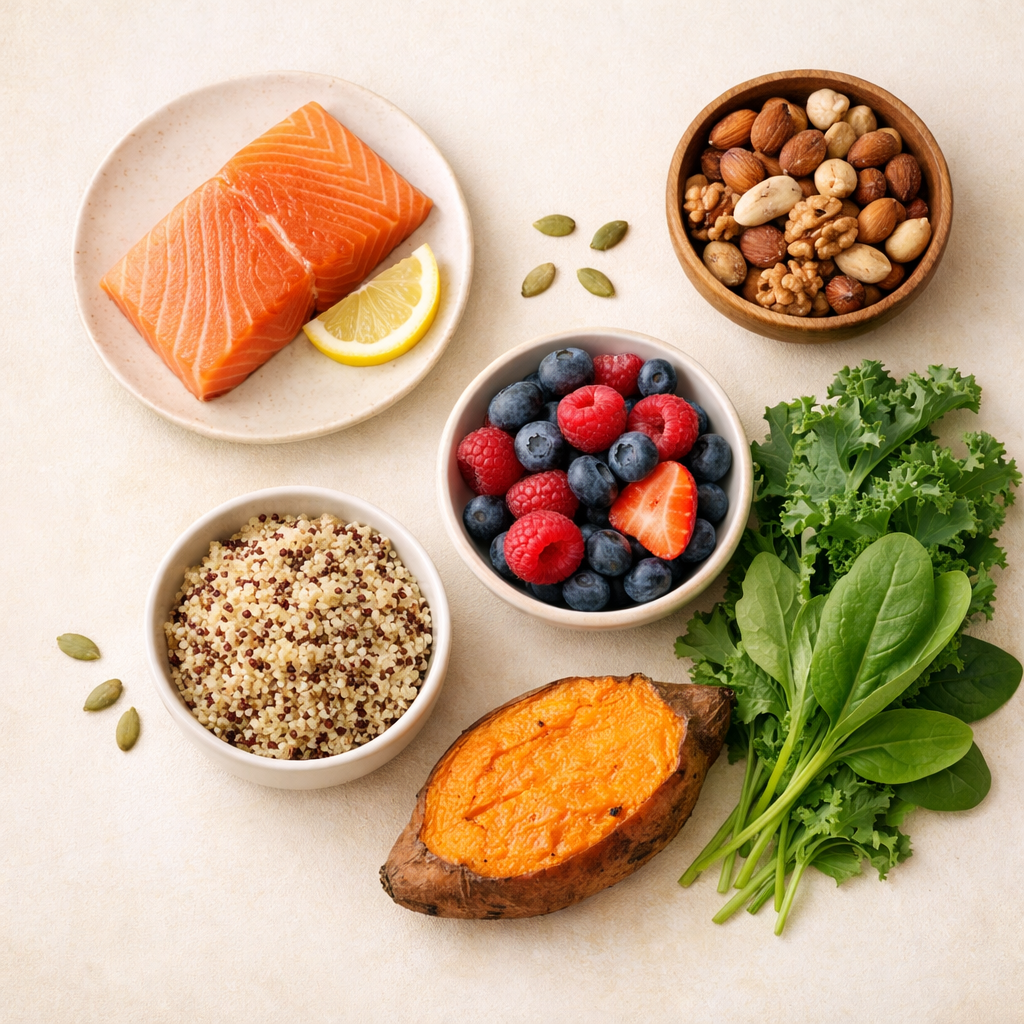
- What to add: Think “color.” Deep greens, bright berries, fatty fish (like salmon), and walnuts.
- The Result: Lower inflammation helps your cells “listen” to your hormones better, making weight loss much easier.
3. The “Power of Protein”
Protein is the ultimate stabilizer. It keeps you full and protects your muscle mass, which is vital for your metabolism.
- The Rule: Never eat a carb “naked.” If you have a piece of fruit, pair it with a handful of almonds or a spoonful of Greek yogurt.
Build Your “PCOS Power Plate”
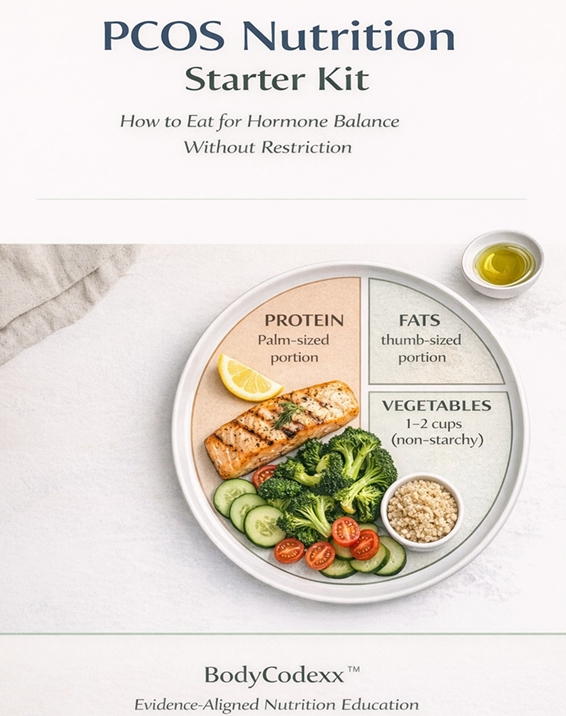
You don’t need a complicated tracking app to eat well. Just follow this visual guide for your main meals:
- 1/2 of your plate: Non-starchy vegetables (Spinach, peppers, broccoli, zucchini, asparagus).
- 1/4 of your plate: High-quality protein (Chicken, fish, tofu, eggs, or lean beef).
- 1/4 of your plate: Slow-burning carbs (Sweet potato, beans, lentils, or brown rice).
- The “Hormone Helper”: Add one serving of healthy fat (1/4 of an avocado or a tablespoon of olive oil).
Simple Swaps for a PCOS-Friendly Kitchen
Making small changes is more sustainable than a total pantry overhaul. Try these:
| Instead of… | Try… | Why it works |
| Sugary Cereal | Chia Seed Pudding or Eggs | High protein and fiber prevent morning insulin spikes. |
| Oat Milk | Unsweetened Almond or Soy | Less starch, more protein/healthy fats. |
| Potato Chips | Air-popped Popcorn or Roasted Chickpeas | More fiber to keep you full longer. |
| Soda or Juice | Seltzer with fresh lime and mint | Hydration without the hormone-disrupting sugar. |
3 Quick Tips for Success
- Don’t Skip Breakfast: Eating a high-protein breakfast within an hour of waking up sets your blood sugar on a stable path for the entire day.
- Move After You Eat: A simple 10-minute walk after dinner can significantly lower your blood sugar response.
- Be Kind to Yourself: If you have a slice of cake at a birthday party, it’s not the end of the world. Your next meal is a fresh start. Stress is also a hormone disruptor—so don’t let “perfect eating” become a source of stress!
👉 Related Read: If you’re working on improving insulin sensitivity through nutrition, you’ll love our guide on Evidence‑Based Exercise Routines That Improve Insulin Sensitivity. It breaks down the best movement types to support your hormones and metabolism — all backed by science.
The Bottom Line
There is no “perfect” diet, but there is a right way to nourish your body when you have PCOS. By focusing on whole foods, fiber, and protein, you can lower your insulin, balance your hormones, and finally see the results you’ve been working so hard for.
YOU MAY ALSO LIKE:
Natural PCOS Treatment: A Realistic, Science-Based Approach to Hormonal Healing
Medical Disclaimer:
The information provided in this post is for educational and informational purposes only and is not intended as medical advice. PCOS is a complex hormonal condition that varies from person to person. Always consult with a healthcare professional, such as a doctor or registered dietitian, before making significant changes to your diet or lifestyle, especially if you are taking medication for insulin resistance or other conditions.