Beyond Collagen: Nutrients That Actually Tighten Loose Skin
You’ve already bought the collagen powder. You stir it into your morning coffee, you’re consistent, and yet — you pull your jawline back in the mirror and wonder if anything is actually happening.
Here’s what the supplement industry doesn’t loudly advertise: collagen is one piece of a much bigger puzzle. Your skin’s firmness depends on a whole ecosystem of nutrients working together. Collagen provides the scaffolding — but without the right co-factors, your body can’t properly synthesize it, stabilize it, or protect it from breaking down faster than you’re rebuilding it.
If you’re serious about tightening loose skin — whether it’s from weight loss, hormonal shifts, aging, or postpartum changes — you need to go beyond collagen. This is the full picture, grounded in real research, with practical ways to get these nutrients into your routine at every budget.
Affiliate Disclosure: This page contains affiliate links. If you purchase through my links, I may earn a small commission at no extra cost to you. I only share products I believe align with my brand and support my readers’ needs.
Why Collagen Alone Isn’t Enough to Tighten Loose Skin
Let’s be clear: collagen supplementation has legitimate peer-reviewed evidence behind it. Studies on hydrolyzed collagen peptides have shown improvements in skin elasticity and hydration with consistent use over 8–12 weeks. We’re not dismissing it.
But skin firmness is a multi-system process. Collagen makes up roughly 75–80% of your skin’s dry weight — and it works alongside elastin fibers, which give skin its snap-back quality, hyaluronic acid, which maintains volume and hydration, and a network of antioxidants and minerals that protect both from premature breakdown.
When any part of this system is depleted — through nutrient deficiencies, hormonal changes, UV damage, or chronic stress — you’ll lose firmness faster than collagen supplementation alone can compensate. Here’s what actually fills those gaps.
Vitamin C: The Non-Negotiable Co-Factor for Tighter Skin
If you add only one thing alongside your collagen, make it vitamin C. This isn’t a trend — it’s basic biochemistry. Vitamin C is an essential co-factor for prolyl hydroxylase and lysyl hydroxylase, the enzymes responsible for stabilizing the collagen triple-helix structure. Without adequate vitamin C, your body produces collagen that is structurally unstable and breaks down more rapidly.
Beyond synthesis, vitamin C is a well-documented antioxidant that helps protect existing collagen from oxidative damage — one of the primary drivers of skin laxity over time.
Food sources: Red bell peppers, kiwi, strawberries, broccoli, and citrus fruits are among the richest dietary sources.
Supplement guidance: General intake recommendations sit around 75mg daily for women, with many practitioners suggesting 500–1,000mg for additional antioxidant support. Buffered ascorbate forms are gentler on sensitive stomachs. Speak with your healthcare provider about what’s appropriate for you.
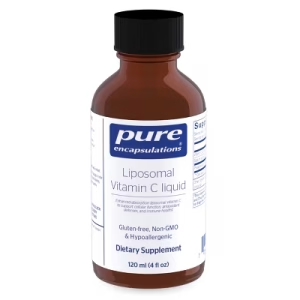
Product recommendations:
- 💰 Budget: Nature’s Bounty Vitamin C 500mg
- 💛 Mid-range: Garden of Life Vitamin C — whole food sourced, well tolerated
- ✨ Premium: Liposomal Vitamin C — liposomal delivery enhances cellular absorption compared to standard tablet forms
Topically, a stable vitamin C serum applied every morning works directly at the skin surface to support collagen and provide antioxidant protection. Pair it with broad-spectrum SPF, and you have one of the most evidence-supported anti-aging combinations available.
Silica: The Structural Mineral Most People Overlook
Silica — specifically the bioavailable form, orthosilicic acid — plays a role in the formation and stabilization of connective tissue, including collagen. Research, including work published in the Archives of Dermatological Research, has suggested that orthosilicic acid may stimulate collagen type I synthesis and support the structural integrity of skin, hair, and nails.
Silica levels do decline with age, and dietary intake has dropped in modern diets that are lower in whole grains and plant foods.
Food sources: Oats, brown rice, bananas, green beans, and certain mineral-rich waters contain naturally occurring silica.
Supplement guidance: Bamboo extract is among the richest plant-based silica sources. Look for supplements that specify the form of silicon provided, as bioavailability varies significantly between forms. Choline-stabilized orthosilicic acid has the most studied bioavailability.

Product recommendations:
- 💰 Budget: NOW Foods Silica from Bamboo Extract
- 💛 Mid-range: Solgar Oceanic Silica
- ✨ Premium: BioSil — contains choline-stabilized orthosilicic acid, the most bioavailable studied form
Vitamin E: Protecting the Collagen You’re Building
Building collagen is only half the equation. If oxidative stress is degrading it faster than you rebuild it, you’re running in place. Vitamin E is a fat-soluble antioxidant that protects cell membranes and lipid-rich tissues from oxidative damage — including the environment surrounding your collagen and elastin fibers.
Vitamin C and vitamin E are also synergistic. Research has shown they regenerate each other’s antioxidant activity when taken together, creating a compounding protective effect greater than either alone.
Food sources: Sunflower seeds, almonds, avocado, spinach, and wheat germ oil are excellent sources.
Important note: The tolerable upper intake level for vitamin E supplementation is generally considered 1,000mg (1,500 IU) daily for adults, but doses above 400 IU may interact with blood-thinning medications. Always check with your healthcare provider before supplementing.
Mixed tocopherols — supplements containing multiple forms of vitamin E rather than just alpha-tocopherol — are considered more reflective of how vitamin E occurs naturally in food.

Product recommendations:
- 💰 Budget: Nature Made Vitamin E
- 💛 Mid-range: Thorne Vitamin E with mixed tocopherols
- ✨ Premium: Pure Encapsulations Tocotrienols — tocotrienols are a distinct form of vitamin E that some research suggests have stronger antioxidant properties, though more human studies are needed
Zinc: The Collagen Repair Mineral You May Be Deficient In
Zinc is required for the activity of matrix metalloproteinases — enzymes involved in collagen remodeling and tissue repair. It also supports the activity of collagen-synthesizing cells called fibroblasts. Studies have found that zinc deficiency is associated with impaired wound healing and reduced collagen formation.
Mild zinc deficiency is more common than most people realize, particularly in women who are vegetarian or vegan, under chronic stress, or managing hormonal conditions such as PCOS that affect nutrient absorption and utilization.
Food sources: Oysters are the richest dietary source by a significant margin. Red meat, pumpkin seeds, lentils, chickpeas, and hemp seeds also contribute meaningfully.
Supplement guidance: The recommended dietary allowance for zinc in adult women is 8mg daily, with an upper tolerable intake of 40mg. Supplemental doses of 15–30mg elemental zinc are commonly used, but higher doses should only be taken under medical supervision due to the risk of copper depletion with long-term use.

Product recommendations:
- 💰 Budget: Garden of Life Zinc
- 💛 Mid-range: Thorne Zinc Picolinate — picolinate form is among the better-absorbed forms
- ✨ Premium: Pure Encapsulations Zinc 30
If you have PCOS, zinc is worth discussing with your healthcare provider — research has explored its role in both skin health and androgen metabolism. Our FREE PCOS Nutrition Starter Kit covers the nutritional picture for hormonal skin.
Copper: The Co-Factor That Holds Collagen Together
Copper is required for the enzyme lysyl oxidase, which cross-links collagen and elastin fibers — essentially weaving them into a strong, organized structure rather than loose, disorganized strands. Without adequate copper, collagen and elastin lack their full structural integrity.
The critical nuance here: zinc and copper compete for intestinal absorption via the same transport proteins. Long-term supplementation with zinc without adequate copper intake can gradually deplete copper levels. If you are supplementing zinc regularly, maintaining copper intake of approximately 1–2mg daily is important to preserve this balance.
Food sources: Beef liver, oysters, dark chocolate, cashews, sunflower seeds, and lentils.
Practical approach: Rather than supplementing copper separately, a quality multivitamin that includes both zinc and copper in an appropriate ratio is often the most practical solution for most women.

Product recommendations:
- 💰 Budget: One A Day Women’s Multivitamin
- 💛 Mid-range: Ritual Essential for Women — transparent sourcing, chelated minerals
- ✨ Premium: Thorne Women’s Multi 50+ — comprehensive formulation designed for hormonal changes
Hyaluronic Acid: Restoring Volume and Hydration From Within
You know hyaluronic acid from your skincare shelf — but oral hyaluronic acid supplementation has genuine clinical support behind it. Hyaluronic acid is a glycosaminoglycan that holds water within the dermis, contributing to skin volume, plumpness, and suppleness. It can bind up to approximately 1,000 times its weight in water, making it a critical component of skin hydration.
Endogenous hyaluronic acid production declines with age, which contributes to the thinner, less resilient quality skin takes on over time.
Several randomized controlled trials have examined oral hyaluronic acid supplementation, with doses typically ranging from 80–200mg daily showing improvements in skin hydration and elasticity over 8–12 weeks. Results vary between individuals, and research is ongoing.

Product recommendations:
- 💰 Budget: Doctor’s Best Hyaluronic Acid
- 💛 Mid-range: NeoCell Hyaluronic Acid
- ✨ Premium: Reserveage Beauty Collagen Booster with Hyaluronic Acid — combines HA with additional antioxidant support
Astaxanthin: A Promising Antioxidant Worth Knowing About
Astaxanthin is a naturally occurring carotenoid found in microalgae and in marine animals such as salmon and krill that feed on it. It has attracted research interest for its antioxidant properties, and some studies have examined its potential effects on skin health.
A number of small clinical trials — including a 2012 study published in Acta Biochimica Polonica — found that astaxanthin supplementation was associated with improvements in skin moisture levels, elasticity, and the appearance of fine lines. However, it’s important to be transparent: most studies to date have been small, and some have been industry-funded. The research is promising but should be considered preliminary rather than conclusive.
Comparisons of astaxanthin’s antioxidant potency to vitamin C or vitamin E that circulate widely online are based on specific in vitro assays measuring particular types of free radical activity. These figures don’t translate directly into equivalent effects in the human body, so we won’t repeat them here as straightforward facts.
What we can say honestly: astaxanthin is an interesting and relatively safe supplement with early evidence supporting skin benefits. It’s worth considering as part of a broader skin-support strategy, with realistic expectations.

Product recommendations:
- 💰 Budget: Sports Research Astaxanthin
- 💛 Mid-range: Nutrex Hawaii BioAstin — natural astaxanthin from Hawaiian microalgae
- ✨ Premium: Thorne Astaxanthin — professional-grade sourcing
How to Build Your Skin-Tightening Nutrient Stack Practically
You don’t need to buy everything at once. A progressive approach is smarter — both for your budget and for your ability to notice what’s actually working.
Start here:
- Collagen peptides if you’re already using them
- Vitamin C 500mg daily
- A quality multivitamin covering zinc and copper at appropriate levels
Add in month two:
- Silica supplement (look for orthosilicic acid or bamboo extract)
- Oral hyaluronic acid 80–200mg daily
Consider in month three:
- Astaxanthin if you want additional antioxidant support
- Vitamin E as mixed tocopherols if not already covered by your multi
Foundational habits that no supplement can replace:
- Broad-spectrum SPF every morning — UV exposure is the single largest environmental driver of collagen degradation
- Adequate dietary protein — collagen is made from amino acids, and inadequate protein intake limits synthesis regardless of supplementation
- Quality sleep — collagen synthesis is upregulated during deep sleep stages; chronic sleep deprivation measurably impairs skin repair processes
- Stress management — chronically elevated cortisol accelerates collagen breakdown via inflammatory pathways
The Hormonal Layer That Most Skin Guides Skip
If your skin laxity feels disproportionate to your age — or changed significantly after pregnancy, stopping hormonal contraception, or entering perimenopause — hormones deserve attention alongside nutrition.
Estrogen has well-documented effects on skin collagen content. Research has shown that skin loses approximately 30% of its collagen in the first five years following menopause, with continued decline thereafter. Estrogen also supports skin thickness, hydration, and wound healing. When estrogen declines — whether through natural aging or hormonal conditions like PCOS — skin can thin and lose firmness in ways that nutritional strategies alone may not fully address.
This is why a skin-focused supplement approach without considering the hormonal context often falls short for women in their 30s, 40s, and beyond.
If this resonates, our Complete PCOS Diet Guide covers the nutrition and hormonal connection in detail — including how diet affects your body’s ability to produce and maintain collagen at a hormonal level.
And if you want a structured, science-informed system for transforming your skin from the outside in, our 30-Day Skin Transformation System walks you through exactly what to apply, when, and in what order — so you’re not guessing.
The Bottom Line on Tightening Loose Skin
Loose skin is rarely a single problem with a single solution. It reflects a convergence of collagen loss, elastin degradation, declining hyaluronic acid, accumulated oxidative damage, and often — hormonal shifts that most beauty advice completely glosses over.
Collagen peptides are a reasonable starting point. But the nutrients that work alongside collagen — vitamin C, silica, zinc, copper, vitamin E, hyaluronic acid, and astaxanthin — are just as important for building, protecting, and maintaining what you’re working to restore.
Build your stack progressively. Prioritize food sources where you can. Be patient — skin remodeling operates on an 8–12 week minimum timeline. And protect your investment every single morning with SPF. UV damage dismantles collagen faster than almost any supplement can rebuild it.
Your skin has the real capacity to improve at any age. It just needs the right, consistent support.
Medical Disclaimer:
This article is for educational and informational purposes only. It does not constitute medical advice, diagnosis, or treatment recommendations. Supplement needs vary significantly between individuals based on health status, medications, and existing nutrient levels. The information provided here is based on available research at the time of writing — nutritional science is an evolving field, and some findings referenced may be updated as new evidence emerges. Always consult a qualified healthcare provider or registered dietitian before starting any new supplement regimen, particularly if you are pregnant, breastfeeding, managing a chronic health condition, or taking prescription medications. Individual results from any nutritional or skincare approach vary and are not guaranteed. If you have concerns about skin changes, consult a board-certified dermatologist.